
Smokybrown Cockroach Pest Control
For Charlotte, NC and the Surrounding Areas
Smokybrown cockroaches differ from other cockroach species found in Charlotte homes and businesses because they live primarily outdoors and depend heavily on moisture to survive. Rather than settling in dry indoor spaces, these pests thrive in tree bark, mulch beds, gutters, and woodpiles, then move inside through attics, eaves, and crawl spaces when conditions change.
As strong fliers drawn to light, smokybrown cockroaches can enter through open doors, windows, and vents, making it difficult to keep them out without addressing the surrounding property. Killo Exterminating Co., Inc. provides expert smokybrown cockroach extermination services throughout the Charlotte metro area, delivering fast, thorough, and lasting results.
Identifying Smokybrown Cockroaches in Your Charlotte Property
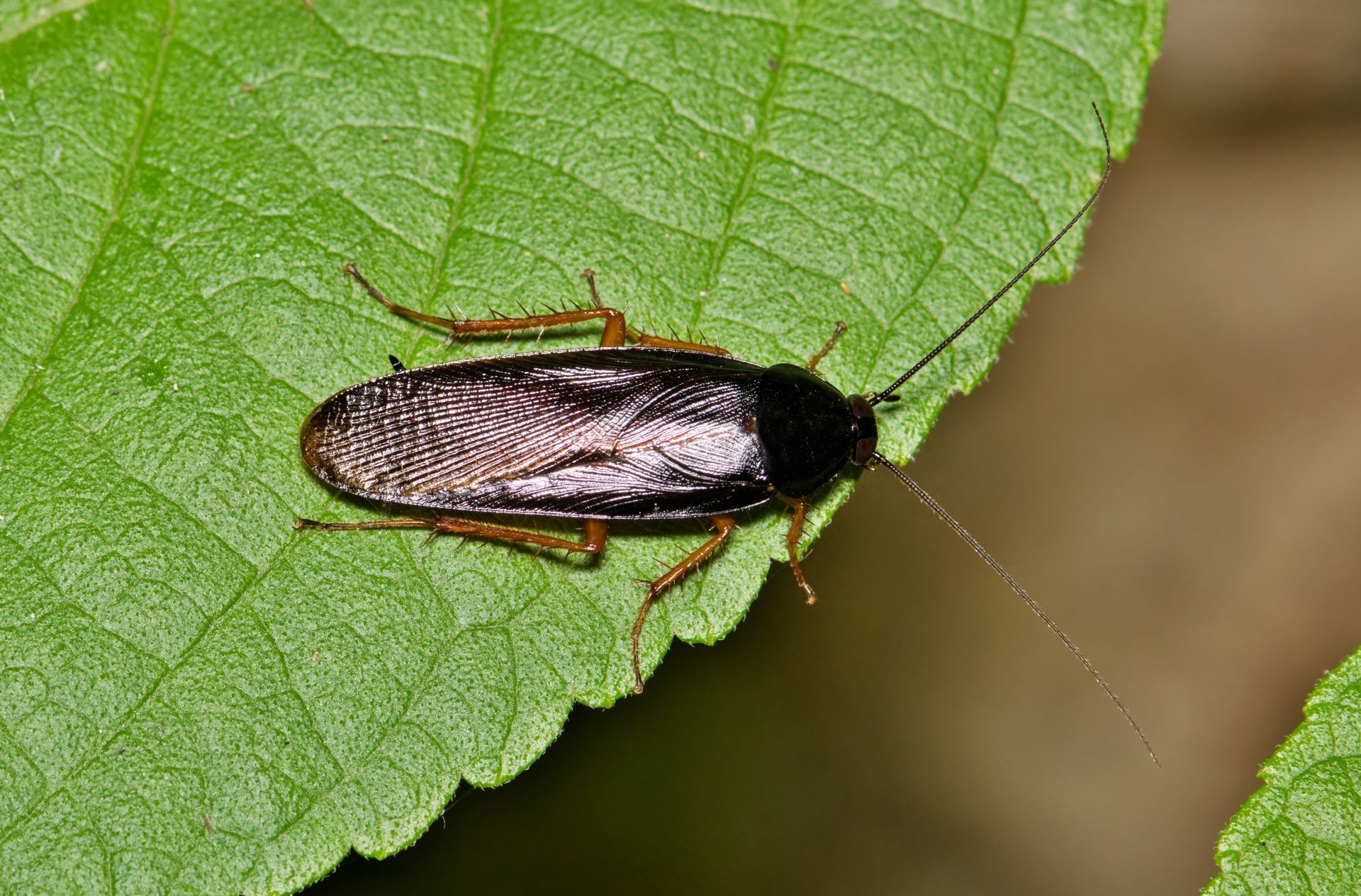
Smokybrown cockroaches are a uniform dark brown to mahogany color with a glossy, almost polished appearance and no banding or markings on the body. Adults are among the larger cockroach species, commonly reaching one to one and a half inches in length. Both males and females are fully winged, and unlike many other roaches, both sexes are capable of sustained flight, which they often use to travel toward lighted windows, porches, and doorways at night. Young smokybrowns are easier to identify than adults, with white markings on their antennae and along the edges of the body that fade as they mature.
Believed to have originated in Asia, smokybrown cockroaches are now firmly established across the southeastern United States and thrive in the warm, humid conditions common throughout the Southeast. They lose moisture quickly and depend on consistently damp surroundings to survive, which is why they cluster around mulch beds, tree holes, gutters, and shaded landscaping before working their way into Charlotte properties.
Unlike
German cockroaches, which stay close to kitchens and food sources, and
oriental cockroaches, which favor damp basements and drains, smokybrown cockroaches are primarily outdoor pests that move indoors when moisture or temperature conditions shift. They typically enter through attics, soffits, eaves, roof lines, and gaps around vents, then settle in upper areas of a structure rather than low, enclosed spaces. Because the source of the problem usually sits outside the building, infestations tend to return until the surrounding property is treated along with the interior.
Call the Trusted Cockroach Exterminator in Charlotte, NC Today!
Signs You Have a Smokybrown Cockroach Infestation
- Fecal Droppings: Smokybrown cockroach droppings are larger than those of smaller species, dark, and cylindrical with blunt ends and fine ridges running along the sides, closer in size to mouse droppings than to pepper flakes. They are typically found in attics, garages, crawl spaces, under eaves, and near gutters and mulch beds, where humidity stays high.
- Live or Dead Cockroaches: Because smokybrown cockroaches lose moisture quickly, they stay close to damp harborage such as attics, wall voids, tree hollows, and woodpiles. They are also strong fliers drawn to light after dark, so activity around porch lights, windows, and patios at night is common. Seeing one indoors during the day often points to a larger population nearby, and finding dead specimens near attic hatches, garages, or along the foundation is an equally reliable warning sign.
- Egg Cases (Oothecae): Female smokybrown cockroaches produce dark brown to nearly black egg cases roughly three-eighths of an inch long, cemented into protected cracks and crevices rather than dropped loosely. Each case contains around 20 eggs. Finding these cases glued inside attics, under eaves, behind loose siding, or in woodpiles and tree cavities indicates active breeding on your property.
- Shed Skins:
Smokybrown cockroaches shed their exoskeletons a dozen or more times as they mature, which means a single population leaves behind a steady supply of casings. Discovering them in attic insulation, crawl spaces, garages, or around mulch and firewood is a reliable indicator of an established population.
Why Smokybrown Cockroach Cockroaches Are a Serious Health Concern
Smokybrown cockroaches carry real health risks for families and employees in Charlotte homes and commercial properties. Because these insects breed outdoors in mulch, leaf litter, gutters, tree cavities, and crawl spaces before moving inside, they arrive having already fed on decaying organic matter, garbage, and animal waste, and they can transfer bacteria such as Salmonella and E. coli onto countertops, food, sinks, and other surfaces they contact while foraging. Their strong flying ability compounds the problem, since they can land directly on exposed food and prep surfaces rather than approaching only along floors and baseboards.
Smokybrown cockroaches also contribute to indoor allergen levels through their shed skins, droppings, and saliva. These allergens are recognized triggers for asthma attacks and allergic reactions, especially in children and individuals with existing respiratory conditions. Because smokybrown cockroaches frequently harbor in attics, wall voids, and crawl spaces, allergen debris can work its way into insulation and duct systems and circulate into the living and working areas below, and because this species is among the largest found in the region, an established population generates a significant volume of that material.
Why DIY Smokybrown Cockroach Treatments Fail
Many Charlotte homeowners reach for store-bought sprays and bait stations at the first sign of smokybrown cockroaches. While these products may eliminate a few visible insects, they rarely address the root of the problem.
Over-the-counter aerosol sprays only treat the insects you can see indoors, while the source of the population sits outside in mulch beds, gutters, woodpiles, tree cavities, and crawl spaces. Killing the roaches that made it into the kitchen does nothing to reduce the colony producing them, so new ones keep arriving night after night. Consumer-grade products also lack the residual potency of commercial formulations, and they break down quickly once exposed to rain, irrigation, and direct sun, which is exactly where a smokybrown treatment needs to hold.
Effective smokybrown cockroach control requires treating the exterior harborage and egg-laying sites along with the entry points that let the population inside, including attic vents, gaps under siding, unsealed utility penetrations, and doors and windows near exterior lighting. Because smokybrown cockroaches are strong fliers that can travel well beyond a property line and recolonize a treated structure, retail products simply cannot replicate the thorough, targeted approach a trained technician delivers.
Preventing Smokybrown Cockroach Infestations in Charlotte
- Keep mulch, leaf litter, and pine straw pulled back from the foundation and thinned out, as these damp exterior beds are where smokybrown cockroaches breed before they ever reach the structure.
- Clean gutters and downspouts on a regular schedule and correct any drainage that pools near the foundation, since standing moisture and decaying debris create ideal harborage for this species.
- Move firewood, lumber, and stored materials well away from the house and elevate them off the ground, and have dead limbs, tree cavities, and overhanging branches addressed where practical.
- Seal the openings that let this species inside, including attic and soffit vents, gaps under siding, unsealed plumbing and utility penetrations, and worn weatherstripping around doors and windows. Screening attic and crawl space vents matters more here than sealing interior baseboards, because smokybrown cockroaches typically enter from outside rather than being carried in with infested items.
- Reduce exterior lighting near entry points or switch to yellow or sodium vapor bulbs, as smokybrown cockroaches are strong fliers drawn to bright white light after dark. Motion-activated fixtures work well for this.
- Ventilate crawl spaces and attics and repair any roof or plumbing leaks promptly, since this species dehydrates quickly and cannot sustain a population without consistent moisture.
- In commercial properties, regular inspections of exterior perimeters, dumpster areas, landscaping beds, roof drains, and loading docks are especially important, as these outdoor zones are the primary harborage sites for smokybrown cockroaches at Charlotte businesses.
Serving Charlotte, NC, and Surrounding Communities
Killo Exterminating Co., Inc. is proud to serve Charlotte and the surrounding communities with professional Smokybrown Cockroach extermination services. Whether you own a home, manage a multi-family property, or operate a commercial facility, our experienced team is ready to help you take back your space.
If you do not see your city listed, contact us! We continue to grow our service area while still providing personalized attention to each of our customers.
Smokybrown Cockroach Control for Charlotte Businesses
Restaurants, hotels, apartment communities, warehouses, and any business with landscaped grounds, loading docks, or dumpster areas face elevated risk from smokybrown cockroach activity. A single confirmed sighting can trigger failed health inspections, reputational damage, and significant operational disruption.
Killo Exterminating Co., Inc. offers customized commercial smokybrown cockroach management programs built around the specific needs and regulatory requirements of your industry. Our treatments address the exterior harborage and entry points driving the problem, delivering thorough, lasting control with minimal disruption to your operations.
Latest Blog Posts