
Bald-Faced Hornet Pest Control
For Charlotte, NC and the Surrounding Areas
Bald-faced hornets are one of the most aggressive stinging insects in the Charlotte area, and their nests are hard to miss once you know what to look for. These hornets build large, gray paper nests out in the open: hanging from tree branches, tucked into dense shrubs, or attached under eaves, porch ceilings, and soffits. Many homeowners do not spot a nest until the colony is already full-sized and actively guarding it.
A single bald-faced hornet colony can hold several hundred workers by late summer, and every one of them can sting more than once. They guard the area around their nest closely, and anything that brushes a branch, bumps a gutter, or runs a hedge trimmer nearby can trigger a fast, coordinated attack. Whether you have found a nest in a tree near your driveway or hornets are hovering around your porch light, Killo Exterminating Co., Inc. can eliminate the colony. Our licensed exterminators know how bald-faced hornets defend their nests, how to reach nests at height, and how to treat them without putting your family or pets at risk.
Identifying Bald-Faced Hornets on Your Charlotte Property
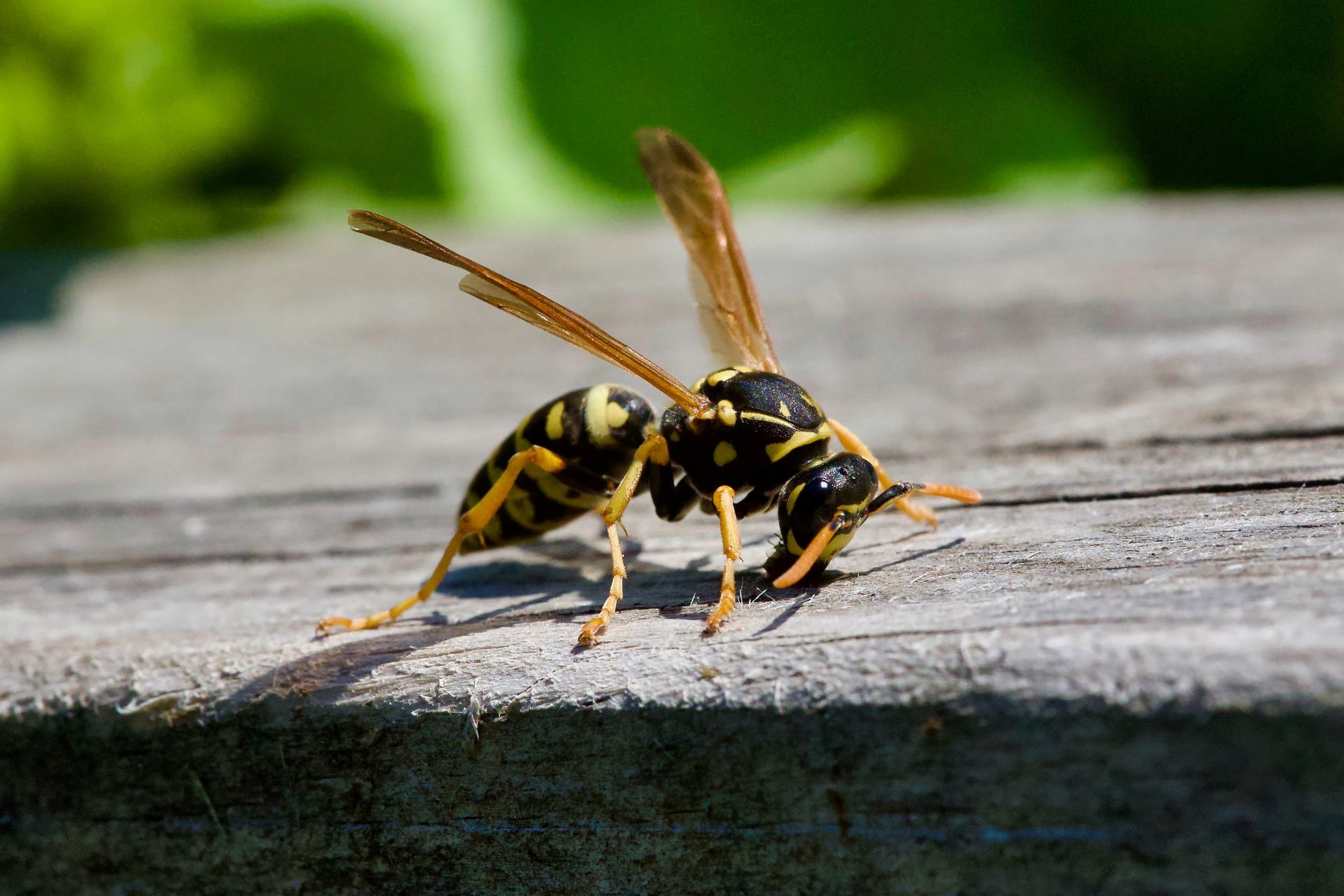
Despite the name, bald-faced hornets are not true hornets. They are a type of aerial yellowjacket, which explains their aggressive, protective behavior. They are easy to tell apart from other stinging insects by their color: instead of yellow and black, bald-faced hornets are black with ivory-white markings on the face, thorax, and the tip of the abdomen. Workers are roughly three-quarters of an inch long, a bit larger and leaner than common yellowjackets. They are strong, fast fliers and tend to patrol in front of the nest, and they can even spray venom toward the eyes of anything they see as a threat.
The nest is the clearest sign of a bald-faced hornet problem. They build enclosed, football- or teardrop-shaped nests from chewed wood fiber, creating a gray, swirled paper shell with a single entrance hole near the bottom. Nests usually hang 3 feet or more above the ground, but they also show up low in hedges and shrubs, where they are easy to bump into. A nest starts out about the size of a walnut in spring and can grow larger than a basketball by fall. Because many nests are hidden by leaves, Charlotte homeowners often do not notice one until the trees go bare in autumn.

Call the Trusted Bald-Faced Hornet Exterminator in Charlotte, NC Today!
Common Nesting Spots for Bald-Faced Hornets
- Trees and tall shrubs: The most common nesting site in the Charlotte area. Bald-faced hornets attach nests to branches anywhere from a few feet off the ground to high in the canopy. Ornamental trees near driveways, decks, and walkways are frequent choices, and the leaves keep the nest hidden through most of the summer.
- Eaves, soffits, and overhangs: Rooflines give hornets a dry, sheltered spot to build. Look under eaves, porch ceilings, gutters, and second-story overhangs, especially on the sunny side of the house. Nests here sit directly above doors and windows, which puts hornets in constant contact with people coming and going.
- Hedges and low landscaping: Dense boxwoods, hollies, and other thick shrubs can conceal a nest just a foot or two off the ground. These are some of the most dangerous nests because they are easy to trigger by accident. Many stings happen when someone trims a hedge, mows along a bed, or reaches into a shrub.
- Sheds, garages, and outbuildings: The undersides of shed roofs, open garage rafters, carports, and barn eaves all offer protection from weather. Nests also turn up on playsets, decks, fences, and other structures that sit quietly for long stretches.
- Less obvious spots:
Utility poles, light fixtures, mailbox posts, signs, and the sides of unused equipment can all hold a nest. Never try to knock a nest down with a broom or a ball, spray it with a hose, or set it on fire. Disturbing an active nest without the right equipment is one of the most common ways homeowners get stung multiple times.
When Do Bald-Faced Hornets Appear in Charlotte?
Charlotte's mild climate gives bald-faced hornets a long active season, typically from April through the first hard freeze in November, with colonies at their largest in late summer.
- Spring (April to May): Mated queens come out of hibernation and choose a nest site. Each queen builds a small paper nest and raises her first workers on her own. This is the best window to catch a nest while it's still small.
- Summer (June to July): Workers take over building and hunting, and the nest expands quickly. Bald-faced hornets feed their young on other insects, so you all see more of them around your yard, garden, and flowering plants.
- Late summer (August to September): Colonies reach their peak size, often several hundred workers. The nest is at its most defensive, and most bald-faced hornet stings in the Charlotte area happen during this stretch, often during yard work.
- Fall (October to November): The colony produces new queens and males. Workers stay defensive until the first hard freeze kills them off. As leaves drop, many homeowners spot a large nest in a tree for the first time.
- Winter:
The old nest is abandoned and is not reused. Only the newly mated queens survive, sheltering under bark, in leaf litter, or in protected gaps around buildings until spring. An empty winter nest is generally safe, but if you see activity on a warm day, keep your distance and call a professional.
Bald-Faced Hornet Exterminator Services Around Charlotte, NC
Killo Exterminating Co., Inc. proudly serves Charlotte and the surrounding areas with professional bald-faced hornet extermination services. Whether you own a home, manage an apartment complex, or operate a commercial property, our experienced team is ready to find the nest, remove the threat, and help you get back to enjoying your space.
If you do not see your city listed, contact us! We continue to grow our service area while still providing personalized attention to each of our customers.

Latest Blog Posts