
Yellowjacket Pest Control
For Charlotte, NC and the Surrounding Areas
Yellowjackets are the stinging insects most likely to send someone in Charlotte looking for help. They nest where you rarely see them coming: in the ground under your lawn, inside wall voids, behind siding, and in the dark corners of sheds and crawl spaces. By the time most homeowners notice a nest, the colony has already grown large and protective.
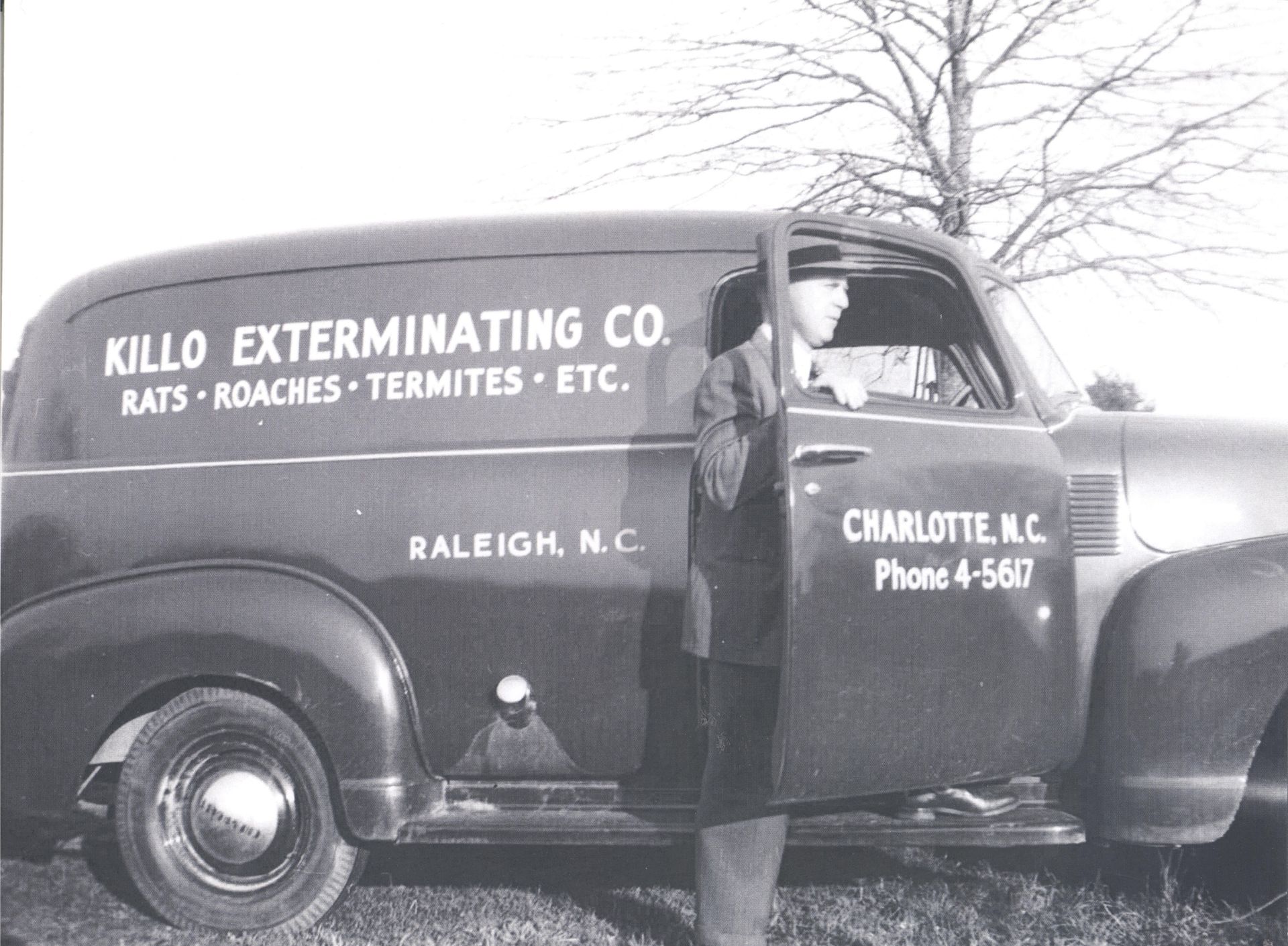
A single yellowjacket colony can hold thousands of workers by late summer, and each one can sting repeatedly. Disturb the nest with a lawn mower or a weed trimmer, and dozens can pour out at once. Whether you have noticed steady traffic in and out of a hole in your yard or yellowjackets are showing up inside your home, Killo Exterminating Co., Inc. can locate the nest, eliminate the colony, and help keep new queens from moving in. Our licensed exterminators know where yellowjackets hide, how they defend their nests, and how to treat them without putting your family or pets at risk.
Identifying Paper Wasp in Your Charlotte Property
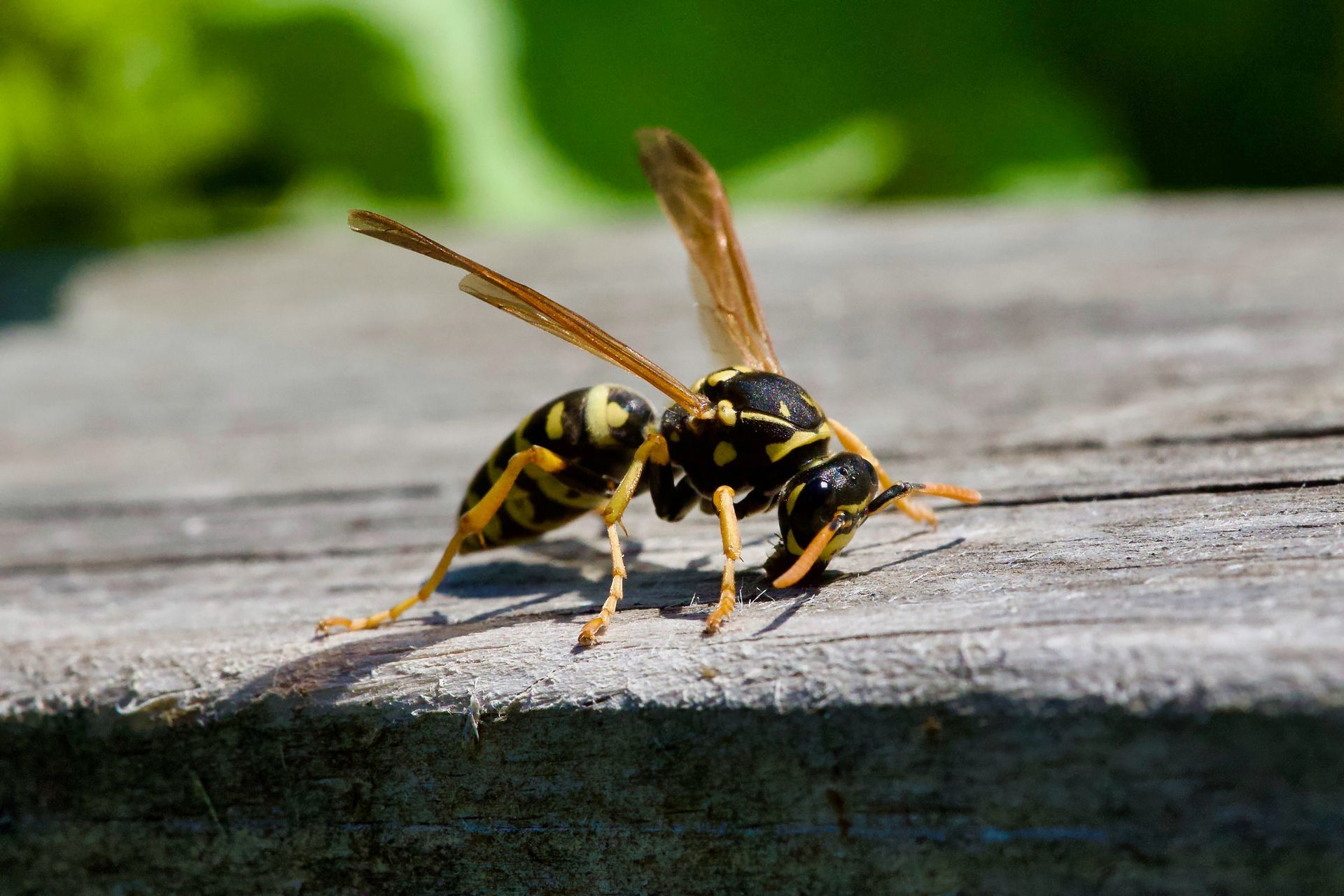
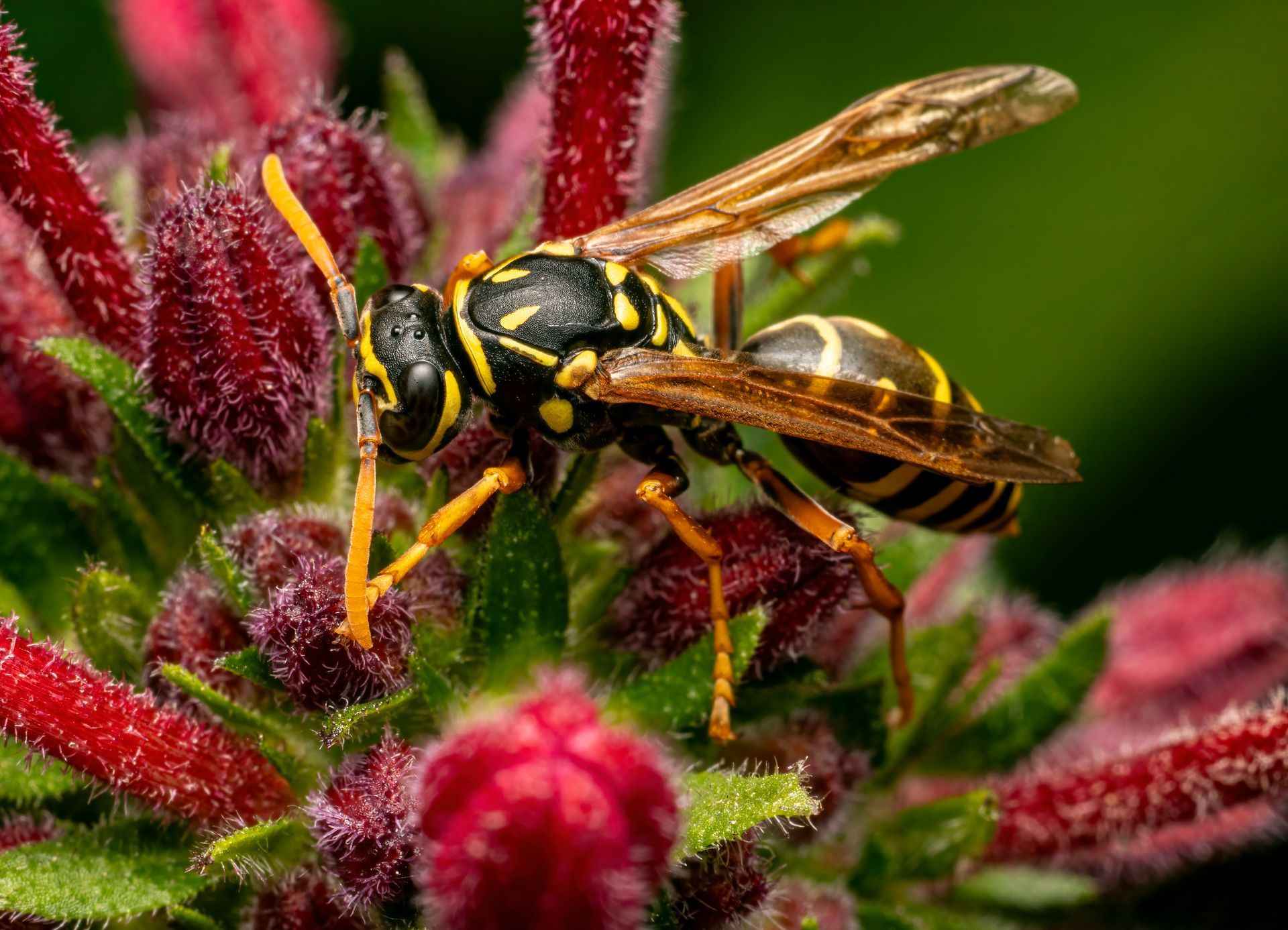
Yellowjackets are often lumped in with paper wasps and hornets, but they look and behave differently. They are about half an inch long, with a stocky, compact body, bright yellow-and-black banded markings, and short legs that tuck up tight during flight. They move fast and fly in quick, darting patterns, especially around food and trash. In the Charlotte area, you are most likely to encounter three species: the eastern yellowjacket, the most common ground nester in the region; the southern yellowjacket, which can build especially large colonies in our warm climate; and the German yellowjacket, which is more likely to nest inside walls and attics.
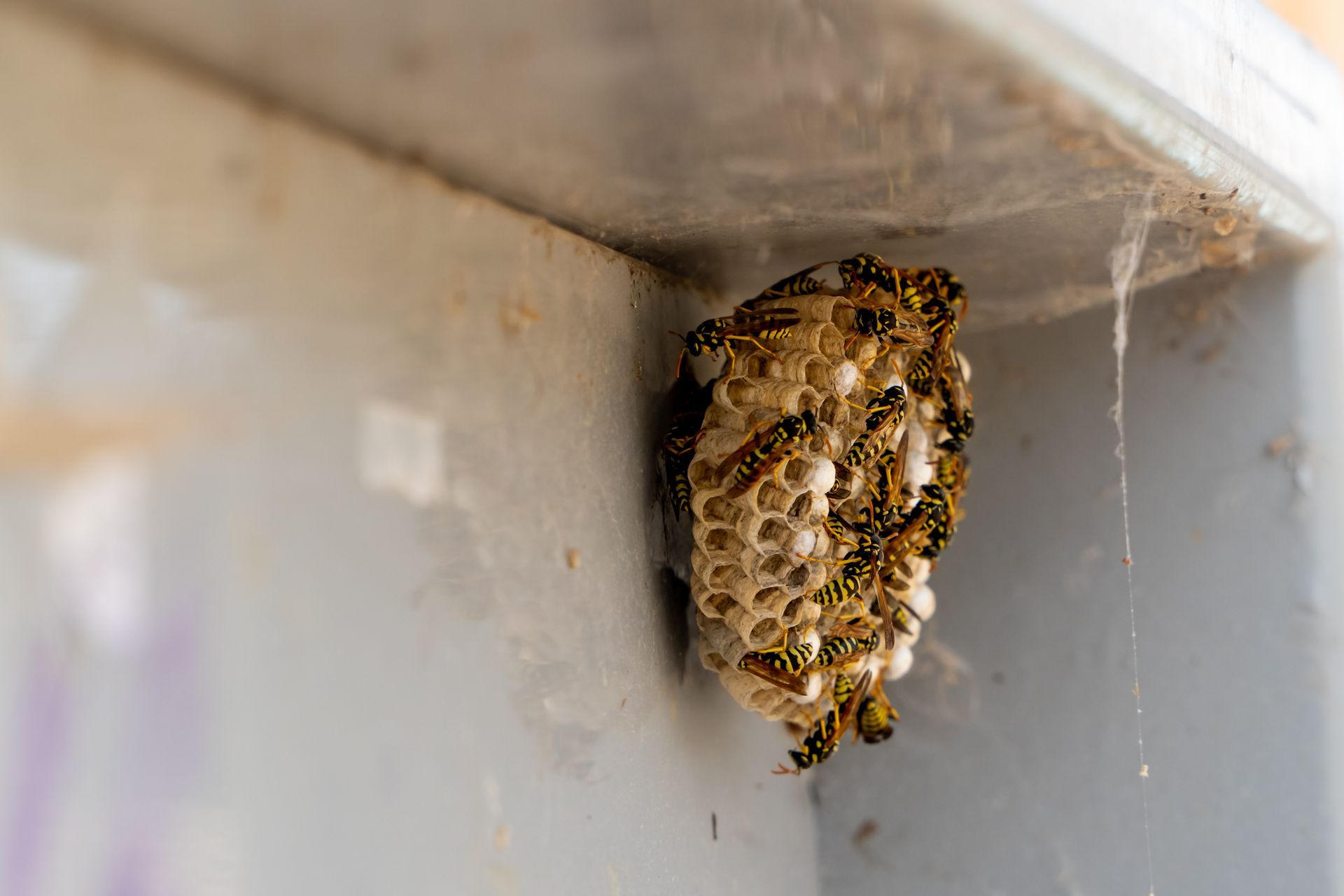
The nest is usually the clearest giveaway, even though you rarely see it. Yellowjackets build enclosed, layered combs wrapped in a gray papery shell, and most nests in the Charlotte area are hidden underground in old rodent burrows or hollow spaces beneath roots and landscaping. You'll usually see a single entrance hole with a steady stream of insects flying in and out. Nests start small in spring and can grow to the size of a basketball or larger by fall, with much of it hidden from view.
Call the Trusted Yellowjacket Exterminator in Charlotte, NC Today!
Common Nesting Spots for Yellowjackets
- In the lawn and landscaping: Underground nests are the most common in the Charlotte area. Yellowjackets take over abandoned rodent burrows, gaps beneath tree roots, and loose soil under mulch beds, shrubs, and ground cover. Look for a small hole with constant traffic, often along the edge of a bed, near a stump, or in a quiet corner of the yard. Most stings happen when someone mows, edges, or steps right over the entrance.
- Inside the walls of your home: Yellowjackets squeeze through gaps in siding, weep holes in brick, loose trim, and openings around pipes and utility lines. Once inside a wall void, the colony can grow for months without being seen. A buzzing sound in the wall, a damp or darkened spot on the drywall, or yellowjackets turning up indoors are all signs of a hidden nest.
- Attics, soffits, and crawl spaces: Dark, dry, protected spaces give yellowjackets room to build large nests. Attic vents, gable ends, soffit gaps, and crawl space openings all provide easy access. These nests can be difficult to reach and should never be sealed off without treatment, which can force the colony deeper into the home.
- Sheds, garages, and outbuildings: Detached structures that sit quiet for long stretches are prime nesting sites. Nests turn up under floorboards, inside stacked lumber, behind stored equipment, and in the voids of old furniture or appliances. Playsets, dog houses, and covered woodpiles are also worth a careful look before kids or pets get too close.
- Less obvious spots:
Railroad tie borders, retaining walls, landscape timbers, hollow fence posts, and old stumps all give yellowjackets protected space to build. Nests inside these structures are easy to disturb by accident, and attempting to dig one out or flood it with a hose is one of the most common ways homeowners get stung multiple times.
What Time of Year Do Yellowjackets Appear in Charlotte?
Charlotte’s mild climate gives yellowjackets a long season, roughly April through the first hard freeze in November, with activity building steadily all year.
- Spring (April to May): Mated queens emerge from overwintering and search for a nest site. Each queen builds a small nest and raises her first workers on her own. This is the best window to catch a colony while it is still small.
- Summer (June to July): Workers take over foraging and nest building, and the colony grows quickly. You will notice more traffic around your yard, garbage cans, and outdoor eating areas, and the nest becomes more defensive.
- Late summer (August to September): Colonies reach their peak size, often thousands of workers. As natural food sources dry up, yellowjackets become aggressive scavengers around sugary drinks, grills, fruit trees, and trash. Most yellowjacket stings in the Charlotte area happen during this stretch.
- Fall (October to November): The colony produces new queens, and the workers remain highly defensive until the first hard freeze kills them off. New queens leave to find protected spots in soil, leaf litter, bark, and wall voids to spend the winter.
- Winter:
The old nest dies out and is not reused. Only the new queens survive, and a warm spell can occasionally bring one out, so a stray yellowjacket indoors in winter is not unusual.
Yellowjacket Removal Services Around Charlotte, NC
Killo Exterminating Co., Inc. is proud to serve Charlotte and the surrounding areas with professional yellowjacket removal services. Whether you own a home, manage an apartment complex, or operate a commercial property, our experienced team is ready to find the nest, remove the threat, and help you get back to enjoying your space.
If you do not see your city listed, contact us! We continue to grow our service area while still providing personalized attention to each of our customers.
Latest Blog Posts